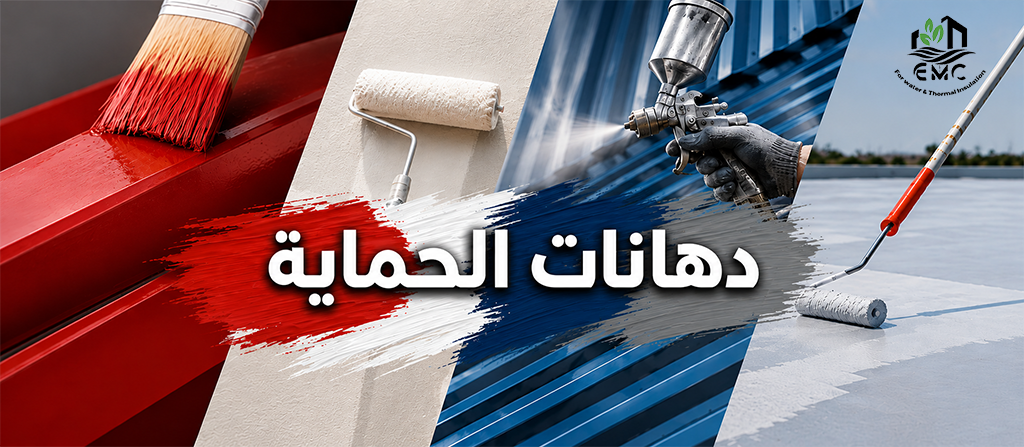
Protective Coatings for Concrete and Steel Surfaces
What Are Protective Coatings?
Protective coatings are among the most important systems used to protect concrete and steel surfaces from various environmental factors. They form a protective layer that prevents the effects of moisture, water, salts, chemicals, ultraviolet (UV) rays, and weather conditions, thereby reducing corrosion and rust while extending the service life of structures and maintaining their operational efficiency.
EMC provides advanced protective coating systems using high-quality materials and modern application techniques in accordance with international standards. The appropriate coating system is selected for each project based on the type of substrate and service conditions to ensure the highest level of protection and performance.
Why Are Protective Coatings One of the Most Important Protection Systems?
Concrete and steel structures are continuously exposed to various environmental factors such as moisture, rain, chemicals, salts, industrial pollutants, and ultraviolet (UV) radiation. Over time, these conditions may lead to concrete deterioration, steel corrosion, and reduced structural performance.
Protective coating systems create a durable protective barrier that isolates the substrate from these damaging factors, reducing maintenance requirements, extending the service life of structures, and preserving both their appearance and performance.
EMC offers a complete range of protective coating systems suitable for industrial, commercial, and residential projects, with each system selected according to the substrate type and operating environment to achieve maximum efficiency.
Protective Coating Systems Offered by EMC
EMC provides integrated protective coating solutions, including:
- Surface sanding and rust removal.
- Abrasive blasting (sandblasting) in all grades and types.
- Epoxy coating systems.
- Polyurethane coating systems.
- Alkyd coating systems.
- Acrylic coating systems.
- Steel protective primers.
- Waterproof coating systems.
- Cementitious coating systems.
- Organic coating systems.
The appropriate system is selected after evaluating the substrate condition, project requirements, and environmental exposure to ensure maximum performance and long-term protection.
First: Steel Protective Primers
Steel primers are used as the first protective layer for metal surfaces before applying the finishing coats. They improve adhesion, prevent rust formation, and protect steel against moisture, weather conditions, and chemicals.
EMC offers a wide range of steel primers suitable for various industrial and engineering applications.
Red Primer
A red anti-corrosion primer for steel based on alkyd resin and containing red iron oxide. It is used as a primer coat to protect steel surfaces before applying the finishing coating system.
BF Primer
A single-component alkyd primer modified with zinc phosphate. It provides effective protection against rust and corrosion and offers excellent adhesion to steel surfaces.
B Primer
A single-component alkyd primer modified with zinc phosphate. It is used as a primer for steel surfaces before applying various coating systems and improves corrosion resistance while extending the service life of the protective coating system.
Zinc B1
A single-component alkyd primer containing zinc phosphate. It is used to obtain a corrosion-resistant steel surface while providing excellent adhesion for subsequent coating layers.
Zinc B2
A two-component epoxy primer containing zinc phosphate. It provides a high level of protection against rust, chemicals, moisture, water, and various weather conditions.
The product has been tested by the National Research Centre (NRC) and complies with the following international standards:
- ASTM D4541
- ASTM B117
Zinc 2020
A two-component epoxy primer containing zinc phosphate. It is used to protect steel structures exposed to chemicals, moisture, and severe environmental conditions while providing long-term corrosion resistance.
Zinc Rich 1
A fast-drying, single-component alkyd zinc-rich primer used to provide corrosion protection for steel surfaces while improving the adhesion of the finishing coating system.
Zinc Rich 2
A two-component epoxy zinc-rich primer that provides the highest level of protection for steel surfaces in industrial and marine environments. It offers excellent resistance to chemicals, corrosion, moisture, and weather conditions.
The product is approved by the National Organization for Potable Water and Sanitary Drainage, has been tested by the National Research Centre (NRC), and complies with the following standards:
- ASTM D4060
- BS 6920
- NSF 60
- EN ISO 1518
Rust Remover
A high-performance rust remover for steel surfaces. It is a water-based transparent material used for removing rust from steel surfaces and hardened concrete residues, preparing the substrate before applying the protective coating system.
Second: Waterproof Coatings
Waterproof coatings are used to protect concrete and architectural surfaces from water leakage and moisture. They form a waterproof barrier that prevents water penetration under both positive and negative water pressure, helping to preserve concrete structures, reduce reinforcement corrosion, and extend the service life of buildings.
EMC offers a variety of waterproof coating systems to suit different applications, ranging from polymer-modified cementitious coatings to acrylic and bituminous systems. The appropriate system is selected according to the nature of the project and operating conditions.
Seal 300
Single-Component Cementitious Waterproof Coating
Product Description:
A single-component cement-based waterproof coating suitable for resisting both positive and negative water pressure.
The product is approved by the National Organization for Potable Water and Sanitary Drainage.
The product has been tested by the National Research Centre (NRC).
The product has been tested according to the following standards:
- ASTM C580
- ASTM C307
- ASTM C321
Coat CM
Polymer-Modified Cementitious Waterproof Coating for Concrete and Architectural Surfaces
Product Description:
A two-component polymer-modified cementitious waterproof coating.
Coat CM 50
Polymer-Modified Cementitious Waterproof Coating for Concrete and Architectural Structures
Product Description:
A two-component polymer-modified cementitious waterproof coating.
The product is approved by the National Organization for Potable Water and Sanitary Drainage.
The product has been tested according to the following standards:
- ASTM C580
- ASTM C307
- ASTM C321
Seal 307
Flexible Cementitious Waterproof Coating
Product Description:
A two-component flexible cementitious coating used for waterproofing and protection.
The product is approved by the National Organization for Potable Water and Sanitary Drainage.
The product has been tested by the National Research Centre (NRC).
The product has been tested according to the following standards:
- ASTM C580
- ASTM C307
- ASTM C321
Seal Elastic 300
Highly Flexible Cement-Based Waterproof and Protective Coating
Product Description:
A two-component waterproof and protective coating based on cement and modified acrylic polymer.
Acryproof
Acrylic-Based Elastomeric Waterproof Coating
Product Description:
A single-component water-based acrylic waterproof coating that forms a highly elastic waterproof membrane after curing and provides excellent resistance to ultraviolet (UV) rays and various weather conditions.
Bitoproof W
Cold-Applied Bituminous Waterproof Coating
Product Description:
A water-based bituminous emulsion used for waterproofing concrete surfaces against water and moisture.
The product has been tested by the National Research Centre (NRC).
The product has been tested according to the following standards:
- ASTM D2939
- ASTM D1227
Bitoproof R
Cold-Applied Rubberized Bituminous Waterproof Coating
Product Description:
A high-viscosity rubberized bituminous emulsion, black to dark brown in color, easy to apply for cold waterproofing applications.
Bitoproof S
Solvent-Based Bituminous Waterproof Coating
Product Description:
A viscous bituminous waterproofing material consisting of bitumen and BF4 solvent. After curing, it forms a high-quality bituminous protective coating.
It is used for permanent protection of surfaces exposed to highly aggressive soil conditions.
Third: Cementitious Coatings
Cementitious coatings are used for finishing concrete and architectural surfaces, smoothing walls, improving adhesion, and repairing surface imperfections. They are characterized by high durability, ease of application, and suitability for both interior and exterior use.
EMC provides a wide range of cementitious products suitable for finishing and surface treatment applications.
Decorative
Pre-Mixed Colored Cementitious Decorative Finish for Interior and Exterior Facades
Product Description:
A dry cement-based mixture designed for finishing interior and exterior walls, plastered surfaces, ceilings, and smooth concrete substrates.
The product has been tested by the National Research Centre (NRC).
The product has been tested according to the following standard:
- ASTM D4541
Fair Coat
Polymer-Modified Cementitious Product Used as Both Putty and Coating for Interior and Exterior Surfaces
Product Description:
A ready-to-use polymer-modified cementitious product that only requires mixing with water on-site before application.
Fair Putty
Fine Cementitious Putty for Surface Levelling and Smoothing
Product Description:
A chemically modified dry cementitious mixture used as a putty for interior and exterior wall surfaces.
Putty 555
High-Quality Cementitious Putty for Preparing Cementitious Surfaces
Product Description:
A cementitious putty used for smoothing interior and exterior plastered walls and concrete surfaces before painting.
Sealer U
Adhesion-Enhancing Sealer
Product Description:
A white water-based sealer.
Sealer T
Water-Based Sealer
Product Description:
A white liquid acrylic-based sealer.
Fourth: Organic Coatings
EMC offers a range of organic coating systems used in industrial and architectural applications according to the nature of each project.
These systems include:
- Epoxy Coatings.
- Polyurethane Coatings.
- Polyester Coatings.
- Alkyd Coatings.
These coating systems provide excellent resistance to corrosion, moisture, chemicals, and weather conditions, while delivering a high-quality decorative finish suitable for a wide range of industrial and architectural applications.
Advantages of Protective Coating Systems
The protective coating systems provided by EMC are designed to protect concrete and steel surfaces against various environmental conditions. Each system is carefully selected according to the project requirements to ensure maximum performance, long-term protection, and extended service life.
Key Advantages
- High resistance to rust and corrosion.
- Excellent resistance to water and moisture.
- Resistance to chemicals and salts.
- Resistance to ultraviolet (UV) rays and weather conditions.
- Extends the service life of concrete and steel structures.
- Excellent adhesion to various substrates.
- Reduces maintenance and repair costs.
- Suitable for both interior and exterior applications.
- Products tested according to international standards.
- Selected according to the project requirements and operating environment.
- Easy maintenance and recoating when required.
Applications
Protective coating systems are used to protect a wide range of concrete and steel structures, including factories, warehouses, steel structures, tanks, pipelines, water and wastewater treatment plants, bridges, commercial and residential buildings, marine structures, and many other projects requiring long-term protection against corrosion, moisture, and harsh environmental conditions.
Application Process
1. Surface Inspection
The project is inspected to evaluate the condition of the substrate and determine the most suitable protective coating system according to the substrate type and service environment.
2. Surface Preparation
The surface is thoroughly cleaned to remove dust, oil, loose materials, and contaminants. Sanding, abrasive blasting, and rust removal are carried out as required to achieve the specified surface cleanliness and ensure maximum coating adhesion.
3. Surface Repair
Any cracks, defects, damaged areas, or joints are repaired using the appropriate repair materials to ensure the surface is fully prepared before applying the protective coating system.
4. Primer Application
The appropriate primer is selected according to the substrate type and coating system, then applied at the recommended thickness to improve adhesion and provide the first layer of protection against corrosion.
5. Protective Coating Application
The selected coating system is applied according to the manufacturer's specifications, whether epoxy, polyurethane, alkyd, acrylic, cementitious, or waterproof coating systems, while maintaining the specified number of coats, dry film thickness, and curing time between coats.
6. Final Inspection
After completion, all coating layers are inspected to verify coating quality, adhesion, thickness, and compliance with the project specifications, ensuring maximum protection and long-term performance.
Technical Specifications
| Item | Specification |
|---|---|
| Service | Protective Coating Systems |
| Suitable Substrates | Concrete, Steel, Metal, and Architectural Surfaces |
| Surface Preparation | Cleaning, Sanding, Abrasive Blasting, Rust Removal |
| Coating Systems | Primers, Epoxy, Polyurethane, Alkyd, Acrylic, Cementitious, Waterproof Coatings |
| Number of Coats | According to the selected coating system |
| Application Method | Brush, Roller, Air Spray, or Airless Spray |
| Corrosion Resistance | High |
| Water & Moisture Resistance | High |
| Chemical Resistance | According to the selected system |
| Weather Resistance | Excellent |
| UV Resistance | Available in selected systems |
| Standards | ASTM, BS, EN ISO, NSF (Depending on the product) |
| Application | Protection and finishing of concrete and steel surfaces |
| System | Primary Application | Key Features |
|---|---|---|
| Steel Primers | Protecting steel surfaces before applying the coating system | Corrosion resistance, improved adhesion, primary protection |
| Epoxy Coatings | Concrete floors and steel or concrete surfaces | Excellent resistance to chemicals, abrasion, and moisture |
| Polyurethane Coatings | Exterior surfaces and industrial facilities | Outstanding UV and weather resistance with a high-quality decorative finish |
| Acrylic Coatings | Building façades and concrete surfaces | High flexibility, excellent resistance to water and ultraviolet (UV) rays |
| Cementitious Coatings | Finishing, repairing, and waterproofing concrete surfaces | Excellent adhesion, moisture resistance, suitable for both interior and exterior applications |
| Bituminous Coatings | Waterproofing foundations, roofs, and tanks | Excellent resistance to water, moisture, and soil conditions |
| Waterproof Coatings | Roofs, tanks, bathrooms, and concrete structures | Prevent water leakage and extend the service life of structures |
Frequently Asked Questions
What is the difference between a primer and a topcoat?
A primer is the first coating layer applied directly to the substrate to improve adhesion and provide initial protection. The topcoat is then applied to provide the final level of protection, durability, and the required finish.
Do protective coating systems vary depending on the substrate?
Yes. The coating system is selected according to the substrate type, whether concrete or steel, as well as the service conditions and surrounding environmental factors.
Can protective coatings be used in areas exposed to moisture and chemicals?
Yes. Specialized coating systems are available for environments exposed to high humidity, water, chemicals, and aggressive industrial conditions.
Is surface preparation necessary before applying protective coatings?
Yes. Proper surface preparation is one of the most important stages of the application process. It includes cleaning, rust removal, abrasive blasting when required, and repairing defects to ensure maximum adhesion and long-term coating performance.
Do all protective coating products have the same application?
No. Each product is designed for a specific application and is selected according to the substrate type, project requirements, environmental conditions, and required performance.
Why Choose EMC?
EMC has extensive experience in applying protective coating systems using high-quality materials and products tested according to international standards. Our experienced engineering and technical teams follow the highest quality standards throughout every stage of the project.
We carefully select the most suitable protective coating system for each project according to the substrate type, operating environment, and project requirements, ensuring maximum protection, extended service life, reduced maintenance costs, and long-term performance.