Expansion Joint Systems & Crack Repair
What Are Expansion Joints and Crack Repair Systems?
Expansion joints are essential components in concrete structures. They are designed to accommodate the movement caused by thermal expansion and contraction without creating stresses that could damage concrete elements.
These joints are filled with durable, compressible joint filler materials that absorb structural movement while maintaining joint integrity and preventing water infiltration.
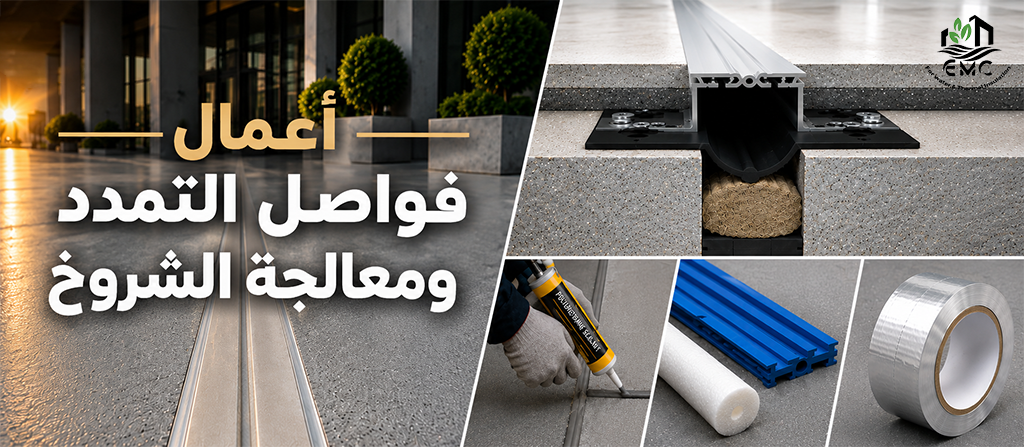
Expansion joint treatment systems typically consist of high-performance sealing materials such as flexible sealants, backer rods (packing rods), EPDM or PVC protective membranes, and other specialized components. Together, these materials create a complete sealing system that accommodates structural movement while ensuring long-term waterproofing and protection.
Why Is Expansion Joint Treatment Important?
Concrete structures are continuously exposed to temperature changes, structural loads, vibration, and natural movement, causing expansion and contraction over time.
A properly designed expansion joint system provides several important benefits:
-
Accommodates thermal expansion and contraction without inducing structural stress.
-
Absorbs structural movement and vibration.
-
Prevents water leakage through construction and expansion joints.
-
Protects concrete against deterioration and weathering.
-
Extends the service life of structures while reducing maintenance costs.
How Does an Expansion Joint System Work?
An expansion joint system creates a flexible, watertight connection between concrete elements, allowing controlled movement while protecting the structure from water penetration and edge deterioration.
The complete system typically consists of the following components:
1. Flexible Sealant
A high-performance elastic sealant used to fill expansion joints. It adheres strongly to concrete while remaining flexible enough to accommodate repeated expansion and contraction.
Polyurethane Sealant is widely used due to its excellent elasticity, weather resistance, and long-term durability.
2. Backer Rod (Packing Rod)
A closed-cell polyethylene foam rod installed inside the joint before applying the sealant.
Its functions include:
-
Controlling sealant depth.
-
Preventing excessive sealant consumption.
-
Ensuring proper joint geometry.
-
Improving sealant performance and flexibility.
3. EPDM / PVC Protective Membranes
Flexible EPDM or PVC joint covers are installed to protect the joint from external exposure.
They help:
-
Prevent water penetration.
-
Protect the sealant.
-
Accommodate multidirectional movement.
-
Increase the durability of the expansion joint system.
4. Fiber Bituminous Joint Board
A lightweight, durable compressible filler board commonly used in concrete expansion joints, including:
-
Concrete pavements
-
Retaining walls
-
Bridges
-
Movement joints between concrete elements
It offers excellent compressibility, ease of installation, and long-term performance.
Materials & Systems Used by EMC
EMC selects specialized expansion joint systems based on project requirements, expected movement, and environmental conditions.
Polyurethane Sealant
A premium elastic joint sealant offering excellent adhesion, flexibility, UV resistance, and weather durability.
Backer Rod (Packing Rod)
Closed-cell polyethylene foam used to control sealant depth and improve joint performance.
Polysulfide Sealant
A two-component flexible sealant with exceptional resistance to chemicals, fuels, and harsh environmental conditions.
Bituminous Joint Filler
A polymer-modified bituminous filler used in applications requiring compressibility and environmental resistance.
EPDM / PVC Joint Systems
Flexible protective membranes that waterproof expansion joints while allowing structural movement in multiple directions.
PVC Waterstop
PVC waterstops are embedded within construction and expansion joints in water-retaining structures such as:
-
Water tanks
-
Basements
-
Foundations
-
Retaining walls
-
Tunnels
They effectively prevent water migration through concrete joints.
Sealing Tape
A waterproof sealing tape used in specialized waterproofing applications to ensure airtight and watertight joint sealing.
Advantages of EMC Expansion Joint Systems
-
Excellent waterproof performance.
-
Permanent flexibility under structural movement.
-
High resistance to expansion and contraction.
-
Superior adhesion to concrete and various substrates.
-
UV-resistant.
-
Excellent weather resistance.
-
Chemical resistance (depending on the selected material).
-
Helps prevent concrete deterioration.
-
Extends the service life of structures.
-
Suitable for both horizontal and vertical joints.
Standards & Compliance
EMC uses expansion joint materials that comply with internationally recognized standards and selects the appropriate system according to each project's performance requirements.
Some of the materials used comply with:
-
ASTM C920 – Standard Specification for Elastomeric Joint Sealants.
-
Tested and certified products designed for continuous movement and long-term weather resistance.
Applications
Expansion joint sealing systems are widely used in:
-
Concrete buildings
-
Bridges
-
Parking structures
-
Water tanks and reservoirs
-
Tunnels
-
Industrial facilities
-
Concrete wall-to-floor joints
-
Wastewater treatment plants
-
Infrastructure projects
Installation Procedure
1. Surface Preparation
The joint is thoroughly cleaned to remove dust, debris, loose concrete, and contaminants to ensure maximum adhesion.
2. Backer Rod Installation
A polyethylene backer rod is inserted into the joint to control sealant depth and provide proper support.
3. Sealant Application
The joint is filled with a high-performance polyurethane sealant such as Tri-Flex PU, specifically designed to accommodate joint movement while maintaining a durable watertight seal.
4. EPDM / PVC Protective Cover Installation
Flexible EPDM or PVC membranes are installed over the joint and mechanically fixed using fasteners and epoxy adhesive to provide additional waterproof protection.
5. Final Protective Coating
A UV-resistant acrylic protective coating is applied over the EPDM membrane to improve weather resistance and extend service life.
Selecting the Appropriate Expansion Joint System
EMC does not rely on a single solution for every application.
The appropriate system is selected based on:
-
Joint width
-
Expected movement
-
Structural type
-
Environmental conditions
-
Exposure to water or chemicals
-
Operational loading conditions
This engineering approach ensures maximum durability, safety, and long-term performance.
Technical Specifications
| Item | Specification |
|---|---|
| System Type | Expansion Joint Sealing System |
| Sealant Material | Polyurethane Sealant |
| Backing Material | Closed-Cell Backer Rod (Packing Rod) |
| Protective System | EPDM / PVC |
| Movement Type | Concrete Expansion & Contraction |
| Joint Movement Capability | Up to ±30% (depending on sealant type) |
| UV Resistance | Excellent |
| Weather Resistance | High |
| Applications | Expansion Joints & Concrete Construction Joints |
Frequently Asked Questions (FAQ)
What is the purpose of expansion joints?
Expansion joints allow concrete to expand and contract due to temperature changes and structural movement without causing cracks or internal stresses.
Can expansion joint systems prevent water leakage?
Yes. When properly installed using sealants, EPDM/PVC membranes, and other compatible components, expansion joint systems provide highly effective waterproof protection.
What materials are commonly used in expansion joint treatment?
Typical materials include:
-
Polyurethane Sealant
-
Backer Rod (Packing Rod)
-
EPDM Membrane
-
PVC Joint Systems
-
Protective Coatings
Where are expansion joints used?
They are commonly used in:
-
Concrete buildings
-
Bridges
-
Tunnels
-
Water tanks
-
Industrial facilities
-
Parking garages
-
Infrastructure projects
Is PVC Waterstop used in every expansion joint?
No. PVC Waterstops are primarily used in construction joints and water-retaining concrete structures such as tanks, tunnels, basements, and foundations where waterproofing is critical.
Is the same sealant used for every joint?
No. The appropriate sealant is selected according to joint dimensions, expected movement, environmental conditions, and project requirements to ensure optimal performance.
Why Choose EMC?
EMC delivers professional expansion joint sealing and crack repair solutions using high-performance materials and engineered installation systems. Every project is executed in accordance with recognized engineering practices to provide reliable waterproofing, long-term structural protection, and maximum durability.